Our Team

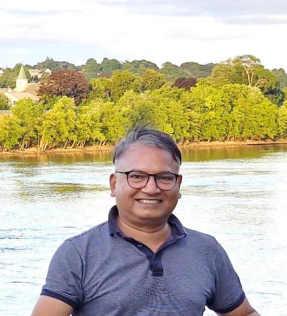
Dr. Bikul Das is a distinguished oncologist and stem cell researcher renowned for his pioneering work in stem cell altruism. After completing his medical training and practicing in India, Bhutan and Canada, he went on to earn a PhD in Oncology from the prestigious Institute of Medical Science at the University of Toronto in 2007. Dr. Das's groundbreaking research focuses on the concept of altruism at the cellular level. In 2012, while working at Stanford University, he made a significant discovery: the identification of altruistic behavior in human embryonic stem cells. This research challenged existing dogma in evolutionary theory and opened new avenues for understanding diseases like cancer. Driven by this discovery, he has since published impactful research, including the role of stem cell altruism in Mycobacterium tuberculosis dormancy, which has been validated by laboratories worldwide. His research has been widely cited, solidifying his position as a leading figure in stem cell altruism research.

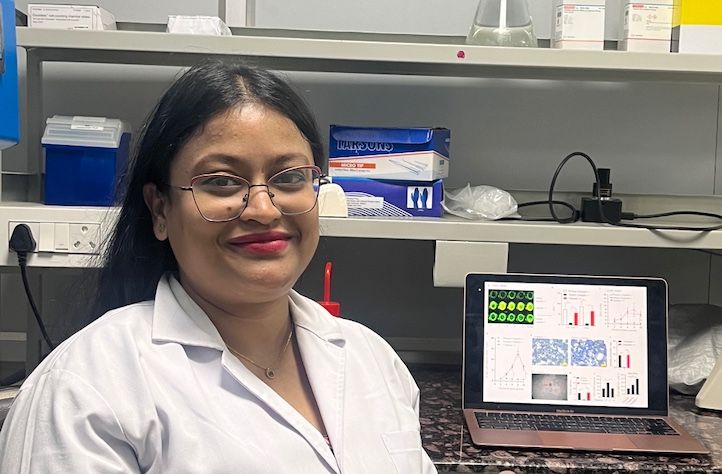
Lekhika Pathak joined KaviKrishna Lab in the year 2018 and has completed her Ph.D. from IIT Guwahati in October 2024 under the guidance of Dr. Bikul Das and Dr. Sanjukta Patra from IIT Guwahati, focusing on stem cell niche defense mechanisms in tuberculosis (TB) and cancer dormancy. Her doctoral research extensively utilized in vitro, animal, and clinical methodologies, exploring the roles of stem cells in disease dormancy and reactivation. Her pivotal first-author paper, "Coronavirus Activates an Altruistic Stem Cell-Mediated Defense Mechanism that Reactivates Dormant Tuberculosis," published in The American Journal of Pathology in 2021, garnered significant global attention, receiving coverage on over 200 international news platforms.
During her tenure as a Senior Research Fellow funded by the Department of Biotechnology, Govt. of India, Lekhika significantly contributed to understanding stem cell altruism in TB dormancy and reactivation. Her subsequent publication in Frontiers Immunology introduced a novel organoid model for isolating and analyzing circulating cancer stem cells from patients with head and neck cancer. Additionally, she played a pivotal role in genome sequencing studies related to stem cell-pathogen interactions, contributing to a paper published in Science Translational Medicine. Her clinical research was complemented by collaborative efforts with clinical teams, significantly enhancing the effectiveness of the KaviKrishna Telemedicine Care initiative.
Beyond research, Lekhika has been actively involved in training over 70 undergraduate and graduate students, guiding them through intensive summer internships. She has also served effectively as the CEO of her laboratory, demonstrating leadership and proficiency in capacity-building within biomedical research driven by Community-Based Participatory Action Research (CBPAR). Her interdisciplinary approach included extensive community medical engagement and participation in cultural-complex-based research initiatives in Sualkuchi-Hajo, alongside scholars in philosophy, economics, and medical humanities. Notably, her research excellence earned recognition at national and international conferences, and she advanced to the first round of selection for the prestigious Fulbright Scholarship.

Dr. Debduti Datta is a molecular cell biologist and expertise on cancer cell signaling. She is currently working on oral cancer as the prestigious DHR-Women Scientist (ICMR). During her postdoctoral work as DST-National Postdoctoral fellow and DBT-Research Associate, she focused on miRNA and intercellular communication using proteomics under the supervision of Bhatnagar awardee, Dr. Suvendra N. Bhattacharyya, CSIR-IICB.

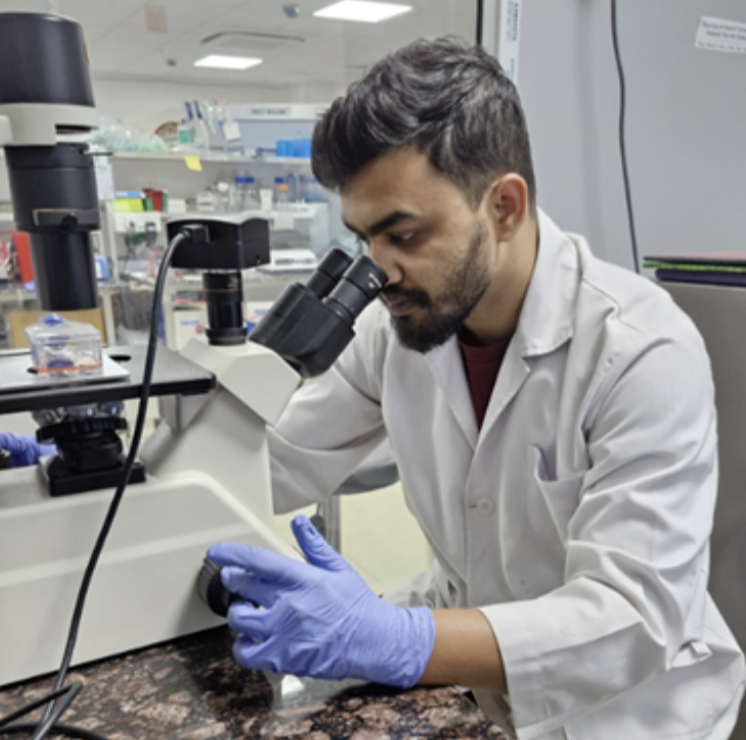
Partha Jyoti Saikia is a dedicated researcher at KaviKrishna Laboratory, driven by a passion for scientific research. With a postgraduate degree in Biotechnology, he joined the laboratory in 2018 as an intern, and subsequently, as a research scholar in 2019. His primary research focus is on the role of the oral oral microbiota/microbiome in oral cancer. His Ph.D. project delves into the mechanisms by which the oral microbiota can modulate the tumor microenvironment, especially targeting cancer stem cells to induce an aggressive phenotype.

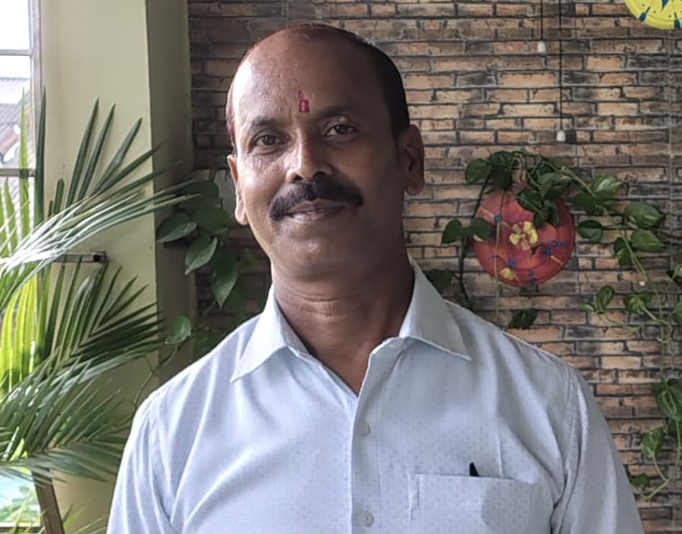
Gokul Das serves as the Lab Assistant at KaviKrishna Laboratory, providing essential day-to-day support to research scholars and ensuring the smooth functioning of laboratory activities.

Currently working on project titled "Identification of Evolution of Multi-Drug Resistant Mycobacterium tuberculosis (MDR-Mtb) Strain in Sputum and Mesenchymal Stem Cells of TB Subjects to Target the MDR-Mtb Strain Intracellular."
Research Interest: Host-pathogen interaction, Computer aided drug discovery, Whole Genome Sequencing (WGS).